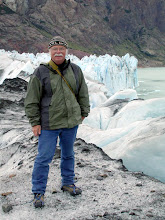
In the midst of sitting in rapt attention watching the unbelievable news coverage of the massive Chilean earthquake on TV today, I got a phone call from my daughter Sara, who works as a professional florist for the hotels of the MGM casino empire in Las Vegas.
"Dad, I'm calling you partly because I haven't talked with you for some time and have been thinking of you a lot. I'm also calling you because today I went to the dentist and had a couple of cavities filled, and all the talk there in the dentist's office was about the earthquake in Chile. And you know, Dad, it made me think a lot about how much you love Chile, and at this moment I just wanted to tell you that I'm so glad you're not down there in Chile right now."
I paused for a moment to take in what Sara had said. Then I replied, "Well, I guess I'm glad that I'm not down there in Chile right now either."
Those are words I never could have imagined uttering - not until now. In retrospect, thanks to my multiple extended visits to Chile and Argentina during the past decade I really have come to love these two countries of the so-called "Southern Cone" of South America. I particularly know that this is a love for not just the land but also for the people of both countries, while acknowledging the subtle cultural differences which give definition to the national identies of citizens of these two neighbors.
I still have not received word from friends of mine who live in Santiago or from others who live in the valley of the Río Bio Bio, not far from the city of Concepción. That bothers me, but I can imagine that they are dealing with things much more basic right now and that they likely have not, or cannot go online presently.
My friend Robert Runyan, who now lives in the small Chilean hamlet of Puerto Bories, located near the town of Puerto Natales, which is in the far southern Magallanes region (Chilean Patagonia) has responded and says he is fine, at least for now. But even as far away as he is, Robert's activities will certainly be affected by the devastating hammer blow that this earthquake has made on the infrastructure of Chile. (Incidentally, you might find it worthwhile to check the link I have to Robert's blog here on my Atacama Viajero page.)
No doubt the extent of the devastation of this new gigantic earthquake (tentatively catalogued as being the fifth worst in recorded history) will transform my beloved Chile, and I suspect that it has also perhaps transformed the telling of my own story of these landmark trips of personal discovery - which I see as being a good thing. That's because now what I will be telling you will carry a more direct and powerful message - telling every reader how I came to love these marvelous and beautiful South American countries. Much of what I was working on and had been saving in draft form will now be dumped, and I will take this event and turn it into my jumping off point to tell of my adventures down there in such beautiful lands before this most recent grave tragedy.
But as I prepare to tell that story I want to remind everyone that time and again throughout history Chile has suffered greatly. But the Chileans have proved themselves to be absolutely resilient in the face of all kinds of adversity. Today they will need our prayers and our help. But I have no doubt that with perseverance and hard work they will recover.
Therefore, I'll dedicate my blogging retrospective to these fine people and their wonderful countries, and share with you how I came to love them and their spectacularly beautiful lands.
Saturday, February 27, 2010

TREMENDOUS 8.8 MAGNITUDE EARTHQUAKE HITS CHILE
Wow. I was just about to post here when the news of a new massive 8.8 magnitude earthquake in south central Chile 200 miles south of Santiago flashed across the screen.....!!!!!!!
Chile of course is one of the most susceptible places on Earth to this sort of thing. During my various sojourns through that most beautiful country, I experienced various temblors ranging from mild to moderately scary, including one quick and frightening one which I had the "pleasure" to ride through while relaxing in my second story hotel room in the Chilean city of Valdivia on Christmas eve 2005. Valdivia, by the way, was the most unfortunate of all cities in the world back on May 22, 1960 when it was ravaged by an incredible 9.5 magnitude earthquake, which destroyed much of that city's remarkable historic buildings and actually managed to re-orient the lay of the land - dropping the land level a full three meters, causing the town's waterfront to drop below the level of the estuary and to turn surrounding farmland instantly into wetlands. That terrible earthquake is regarded as being the worst in recorded history, and it sounds as if this new one could be nearly equal to the 1960 Valdivia quake.
This new massive earthquake appears to have its epicenter just 115 km (about 70 miles) from the major Chilean city of Concepción, which is located on the coast about halfway between Valdivia and the capital of Santiago. Preliminary reports I have seen say some buildings in Santiago have collapsed.
I have written to friends who live there expressing my concerns and sending my own good wishes but I know that as the morning arrives they will have more immediate concerns to deal with rather than to respond to me.
Beyond this I would recommend the reader to access their most trusted news source to ascertain the latest regarding this tragedy.
I will of course resume my writing project sometime, but for now I am more concerned with the safety and health of friends who live there, not only in Santiago but who live near the Chilean city of Los Angeles, in the Bio Bio River valley...
These are wonderful people who live in a very special and beautiful place. I pray for them and will ask you all to do so as well.......
Chile of course is one of the most susceptible places on Earth to this sort of thing. During my various sojourns through that most beautiful country, I experienced various temblors ranging from mild to moderately scary, including one quick and frightening one which I had the "pleasure" to ride through while relaxing in my second story hotel room in the Chilean city of Valdivia on Christmas eve 2005. Valdivia, by the way, was the most unfortunate of all cities in the world back on May 22, 1960 when it was ravaged by an incredible 9.5 magnitude earthquake, which destroyed much of that city's remarkable historic buildings and actually managed to re-orient the lay of the land - dropping the land level a full three meters, causing the town's waterfront to drop below the level of the estuary and to turn surrounding farmland instantly into wetlands. That terrible earthquake is regarded as being the worst in recorded history, and it sounds as if this new one could be nearly equal to the 1960 Valdivia quake.
This new massive earthquake appears to have its epicenter just 115 km (about 70 miles) from the major Chilean city of Concepción, which is located on the coast about halfway between Valdivia and the capital of Santiago. Preliminary reports I have seen say some buildings in Santiago have collapsed.
I have written to friends who live there expressing my concerns and sending my own good wishes but I know that as the morning arrives they will have more immediate concerns to deal with rather than to respond to me.
Beyond this I would recommend the reader to access their most trusted news source to ascertain the latest regarding this tragedy.
I will of course resume my writing project sometime, but for now I am more concerned with the safety and health of friends who live there, not only in Santiago but who live near the Chilean city of Los Angeles, in the Bio Bio River valley...
These are wonderful people who live in a very special and beautiful place. I pray for them and will ask you all to do so as well.......
Monday, February 08, 2010
THE ATACAMA VIAJERO - IN RETROSPECT
A whole year has passed since I was last in South America - and a whole year has passed since I've taken the trouble to write about it. One could call it a simple sin of omission, but in more real terms I think it has been more like I have been carrying a huge chunk of lethargy on top of my shoulders ever since I returned from that last rather short two week visit over New Year's of 2009.
And speaking of 2009, I'd venture to say that overall, the year ranked as one of the more forgettable years in recent memory save for the celebratory "graduation" of my son Peter from college back in June. Other than that, I'd say it was a year in which I truly lost my focus and drifted aimlessly, rudderless on a bleak, gray sea.
At least in the last couple of months I've recognized that my path, as it was, was going nowhere, and that the soultion was to take charge of things and get back on track.
And speaking of 2009, I'd venture to say that overall, the year ranked as one of the more forgettable years in recent memory save for the celebratory "graduation" of my son Peter from college back in June. Other than that, I'd say it was a year in which I truly lost my focus and drifted aimlessly, rudderless on a bleak, gray sea.
At least in the last couple of months I've recognized that my path, as it was, was going nowhere, and that the soultion was to take charge of things and get back on track.
SETTING A COURSE
Back last autumn, when tickets for the 26th annual National Cowboy Poetry Gathering first went on sale, I saw in the brochure that my friend Teresa Jordan was going to teach a three-day nonfiction writing workshop at the beginning of Poetry Gathering week. Teresa is one of those rare artistically gifted people who seem to actually live to create. As a result of her natural inner drive, she has established her credentials as both an author and as a visual artist. I have always admired Teresa, and the fact that I've known her for quite a number of years made easy for me to make the choice to sign up for her workshop, which took place from January 25th through the 27th of this year at the start of the Cowboy Poetry Gathering over in Elko, Nevada - in other words, it took place just two weeks ago.
Now why did I bother to post all that? First of all, I saw that the workshop could provide me with a decent means to finally shake that awful weight of lethargy off of my shoulders and get me pointed back in the right direction. Secondly, I figured if Teresa was worth her stuff as much as a teacher as she was as a writer, then I'd come out way ahead on my investment represented by the actual cost of the workshop in time and money because I would have gained a good amount of insight into the writing process and the tools one can utilize in following such a pursuit. Finally, there was the hope that being there and interacting with other writers could jump-start my own dormant creative juices, which are painfully symbolized in my own mind by the number of unfinished research and writing projects languishing away in countless files - both in my computer and on my bookshelves.
And so this current endeavor is now a big part of the jump-start I just mentioned. Aside from my other projects, one of my most fervent wishes has been to finally put down on paper the definitive narrative of my five (so far) South America journeys.
Many years ago, when I was just graduating myself from the University of Utah, I can recall my father telling me that whenever I set out on a substantial journey, it would behoove me to keep a running journal as I went along. That way, he said, things that would otherwise pass from my memory over time would not be forgotten. Back then I was about to set out on a hitch-hiking adventure to discover the Oregon Coast, and thankfully, I took my father's advice and kept a journal of the entire trip. That was 40 years ago. If I hadn't kept the journal, I'd say that now at least 98% of that experience would have blurred beyond recognition in my memory. But I still have it, and I open it up from time to time and start to read...and suddenly I am carried back to those youthful days, thumbing my way down the coast, vicariously re-living that old adventure.
On each of my South America trips I diligently kept up a journal. And I also knew that by taking copious amounts of photos as I traveled on and noting exactly when and where each picture had been shot in a companion photo logbook would also prove to be quite valuable. Also, once I started to make blog posts I recognized thay they would also become priceless resources, and although my original blog no longer exists online, I managed to burn my posts onto a CD before closing it down. And before the advent of blogging, for my firts trip especially, I was wise to print out the best of the individual emails I had sent out to friends, thus preserving the words of my own voice on my initial trip - which was the real journey of discovery.
So I would like to welcome you all, friends and visitors, to come along with me as I initiate the grand retrospective, starting with a prologue in which I will attempt to explain my initial motivations for going in the fall of 2002 in the first place, and then to dive in and go forward with my narrative. Those great adventures have profoundly shaped me and changed me, and perhaps if I can write my story out good enough, you, the reader, will come to see a bit of that remarkable change. Watch for new and continuing posts right here, with maps and photos included. Cheers!
Monday, January 12, 2009
STROLLING AROUND SANTIAGO CENTRO
Considering that this is the end of my fifth trip to Chile, I would normally not be making a special trip around the city madly shooting snapshots of famous landmarks, but considering that there might be several of you who are checking into this blog who might like to see such photos, that´s exactly what I did on Saturday, with the plan to post a half-dozen pictures here for general consumption.
This first picture was taken along the Alameda Bernardo O´Higgins not far from Cerro Santa Lucia. It shows the front building of the Universidad de Chile. Strolling a bit further down along the Alameda one eventually comes to El Palacio La Moneda, which is the Chilean Presidential Palace, shown in this next photo:
 La Moneda is the seat of Chile´s government, the place where current President Michelle Bachelet has her offices. It is also the scene where the martyred former President Salvador Allende lost his life during the Pinochet golpe de estado which happened on September 11, 1973, a date which marks Chilean history like no other. The next picture is of the memorial statue of Salvador Allende, which is in front of the Justice Ministry and faces La Moneda:
 This next picture shows some of the striking buildings in Santiago´s financial district. The streets are fairly quiet because it was Saturday. Otherwise, they would be humming with activity:
 Now we come to the famous Plaza de Armas, and this next picture shows the grand Iglesia Catedral, which fairly dominates the view to the noorthwest from the heart of the plaza:
 Finally, here is a picture of the statue of the Conquistador of Chile, Pedro de Valdivia, located in the northeast corner of the plaza:
 Well, there you have it. I quickie glimpse of some of the landmarks of the city of Santiago. Now, my flight back to the USA leaves here tomorrow night at 10:30 local time. The flight is non-stop overnight to Atlanta, GA, where I will be changing planes for a flight to Salt Lake City, UT, where my car is parked. My scheduled arrival in Salt Lake will be 10:30 a.m. on the morning of the 14th, and I will plan to go from there driving westward to my home in Wells, Nevada.
This first picture was taken along the Alameda Bernardo O´Higgins not far from Cerro Santa Lucia. It shows the front building of the Universidad de Chile.
 Strolling a bit further down along the Alameda one eventually comes to El Palacio La Moneda, which is the Chilean Presidential Palace, shown in this next photo:
 La Moneda is the seat of Chile´s government, the place where current President Michelle Bachelet has her offices. It is also the scene where the martyred former President Salvador Allende lost his life during the Pinochet golpe de estado which happened on September 11, 1973, a date which marks Chilean history like no other. The next picture is of the memorial statue of Salvador Allende, which is in front of the Justice Ministry and faces La Moneda:
 This next picture shows some of the striking buildings in Santiago´s financial district. The streets are fairly quiet because it was Saturday. Otherwise, they would be humming with activity:
 Now we come to the famous Plaza de Armas, and this next picture shows the grand Iglesia Catedral, which fairly dominates the view to the noorthwest from the heart of the plaza:
 Finally, here is a picture of the statue of the Conquistador of Chile, Pedro de Valdivia, located in the northeast corner of the plaza:
 Well, there you have it. I quickie glimpse of some of the landmarks of the city of Santiago. Now, my flight back to the USA leaves here tomorrow night at 10:30 local time. The flight is non-stop overnight to Atlanta, GA, where I will be changing planes for a flight to Salt Lake City, UT, where my car is parked. My scheduled arrival in Salt Lake will be 10:30 a.m. on the morning of the 14th, and I will plan to go from there driving westward to my home in Wells, Nevada.
Actually, I am thinking that this will be my last post for this time around from South America. Tomorrow will be a bit of a touchy day since I have been having a number of communication connection problems with my friend and agent Andres Gabor. There seems to be a bit of a problem with the cell phone network, so I will be spending most of my time trying to get through to him to ensure that I make it alright tomorrow night out to the airport.
Regardless, it has been a good time, and I do hope that you have enjoyed following my monologue here once again. Chao, amigos!
Friday, January 09, 2009
LOS TRES CABALLEROS
 So here´s the three hardest working obreros at Las Siete Cabañas. The little guy on the left in the sleeveless muscle shirt is Carlos. I can remember how crazy he got singing Beatles songs on New Year´s Eve...he had the words down perfectly even if he didn´t have the slightest idea what those words meant. On the right, in the green Jameson´s Whisky shirt is Orlando, who actually happens to be one damn fine guitar player. And finally, the big guy in the middle is none other than Diego Parada Savignone himself, crew leader and manager of the cabañas.
Actually, I snapped this photo only minutes before leaving El Tabo for my return drive into Santiago. These three characters were, along with Diego´s wife Luisa, my best friends for the eight days I spent there, and I know that they are hopeful that I can muster up another trip to Chile and a posible return to El Tabo in December, but that´s another story.
I made it back into Santiago without incident, and actually feel a bit of pride in the fact that I was able to navigate the highways and easily find Andres´new office in the barrio Los Condes. After I got back, he put me up in his apartment in El Centro on Calle Mosqueto, and so today I have been taking in once again the sights of this superb downtown.
Unfortunately I have been having a bit of a task trying to re-connect with Andres, and since he forgot to get me a cell phone I have had to frequent one or another of the so-called "Centro de Llamados," which are glorified telephone booths, usually doubling as internet cafes as well to try to call Andres. I did get ahold of him this morning, and, thinking that we would be getting together for almuerzo (lunch), I was a bit surprised when he told me he would be too preoccupied and for me to call him after 7 p.m. because he was going to make arrangements for us to get together this weekend for a barbecue. Well, that sounded nice, and I did my part - waiting until after 7 p.m. to call him. But all I got was his voice mail, so I figure that things are particularly insane for him right now as he is taking in his kids this weekend and will be shopping for food etc. So I just told his voice mail I´d try again in the morning.
So Santiago is hot. Yes, HOT. I mean temperature-wise. Like it is almost 8 p.m. as I type this in the internet cafe, and the temperatures must still be in the upper 80´s (F). And there´s no end in sight for the heat until I get on my return flight home to the cold winter in the USA.
Anyway, I´ll try to shoot some photos of some of the major city landmarks here in El Centro Santiago for my next post. Until then, amigos...
Wednesday, January 07, 2009
BOOKS ON ON THE BEACH 2009: RIDING WITH THE CAVALRY
Okay, so everyone knows that when I take up residence in a place like this for some hard-core R&R, I usually bring along half a suitcase full of books. Well, this time, with my stay here at Las Siete Cabañas set for only eight days (today is my last day), I only brought along a couple of titles, so the suitcase is lighter. But I´ve still been able to while away plenty of hours reading, and I would like to tell you a little bit about this trip´s chosen books.


Anyway, as the book´s notes remind us, the Soviet Union wanted to forget this disastrous campaign. Babel´s Red Cavalry stories, however kept the fiasco in the public eye in both the Soviet Union and abroad, ever since. Sadly for Babel, his work eventually came to be deemed politically incorrect at a time when Stalin´s purges were ravaging Russian culture. On May 15, 1939, agents of the Soviet secret police burst into Babel´s house and arrested him. In the process, they also gathered up many stacks of unpublished documents in his posession. Immediately he was to become a non-person, his name blotted out and removed from official publications. They nexecuted him in 1940. It took until 1954 for his name to finally become officially exonerated, but for a long time thereafter, his books were only published in censored form for many more years. Now his reputation has recovered significantly, and his writings are again being praised, both inside and outside of Russia. The small picture, above is a photograph of Isaac Babel.
It is not by coincidence that both books relate to the exploits of cavalrymen in battle, because a few weeks before my departure I had been investigating the war poetry of the late, great British poet Wilfred Owen, who wrote some really incredible verse describing his experiences in the trenches during World War One. Unfortunately, Owen was killed in battle shortly before that war concluded, but not before he had written his war poems. Anyway, I purchased a copy of the Collected Works of Wilfred Owen, but that is not one of the books I will be writing about today. You see, my investigation on Owen brought to my attention the work of another writer, one who wrote prose instead of poetry, but whose literary efforts were superbly poetic in their own way. That author happens to be a Jewish Russian war correspondent (like Vasily Grossman, whose sprawling epic Life and Fate had captured my imagination when I was here on the beach last January) who is now considered to be a giant of 20th Century Russian Literature, Isaac Babel. Babel´s place in the pantheon of great Russian authors grew out of a vast body of work, and particularly out of his early masterpiece, the Red Cavalry cycle. Now I will get deeper into Babel shortly, but first I want to discuss another book, El Húsar (The Hussar), by the noted Spanish author, Arturo Pérez-Reverte, which I was inspired to bring along with me as a cavalry "companion" to the Babel book, specifically to read here on the beach.
El Húsar. by Arturo Pérez-Reverte. (Written in Spanish)
I originally bought this book in October 2005, at the FeriaChilena Del Libro in Santiago Centro. This book was Pérez-Reverte´s first attempt at authorship, written in1983. It is set in Andalucia, Spain in the year 1808, in the midst of the Peninsular War, also known as the Spanish War of Independence, in which France fought against Spain, Great Britain and Portugal for control of the Iberian Peninsula during the Napoleonic Wars. The novel follows the exploits of Fredric Glüntz, a young, 19 year-old sub-lieutenant in Napoleon´s vaunted light cavalry, specifically, in the 4th Regimento de Húsares, at the time posted to Spain and about ready to engage the forces of both the Spanish army as well as the much-feared partisans known as guerrilleros (the English word for partisan fighters, or guerillas came from these very fighters).
Before I left on this current trip I could recall having been fairly blown away by how this book unfolded when I first read it back in 2005, and decided that I´d like to perhaps read it again with an eye towards perhaps someday translating it into English, so I tucked it away in my suitcase along with Babel´s Red Cavalry, to be read again, here in El Tabo.
Actually, I did a bit of fact checking on the works of Pérez-Reverte to see if in fact an English translation of El Húsar indeed exists, and my preliminary search came up fairly inconclusive. I did learn that the 2005 Spanish edition I was reading had gone out of print, but also learned that the author had originally refused to let any of his works be translated into English, although he had later allowed several of his works to be translated, including his famous The Fencing Master and Flanders Panel (which won France´s Grand Prize for Dectective Literature). Apparently his most popular book to date, Captain Alartriste, has not been translated, but I found mention of an English translation of El Húsar, but no availability whatsoever.
Anyway, the story follows sub-lieutenant Glüntz, an idealistic new hussar in the ranks, as he and his companios prepare for a major battle on the fields of Andalucia. The author applies painstaking detail in his descriptions of the cavalrymen, their uniforms and equipment, and while he concentrates on Glüntz, he also spends significant time developing his companions, especially his best friend, another sub-lieutenant, Michel de Bourmont. The story evolves through the course of one day, starting at before daybreak and moving forward towards the enivatible climactic cavalry charge folowing early skirmishes and concluding with the grim reconciliation of the story in which young Glüntz´s wide-eyed idealism and dreams of the glory to be gained in this war in service to the Emperor is utterly crushed beneath the sheer horror of the actual combat. I cannot begin to replicate the power of Pérez-Reverte´s narrative but will say that it comes at you like a sledge hammer, hitting with full force as the story unfolds. The reviews I read regarding this extraordinary first effort by Pérez-Reverte state that this is far from his best work, but the seeds of the greatness that came to flower in The Fencing Master and in Captain Alartriste are fully contained within the pages of El Húsar. If I do not go forward to attempt to translate this work, I will certainly want to follow up this second read by obtaining at least the above two novels for future reading.
Red Cavalry. by Isaac Babel (Original Russian translated into English by Peter Constantine)
Isaac Babel was born in Odessa in 1894. He started writing in 1916, although his primary output came in the years 1923-1924. His basic genre in all of his writings appears to have been the short story, which is where his "Red Cavalry" stories all fit. This series of stories was based on Babel´s impressions of the 1920 Soviet military campaign against Poland by the Red army led by GeneralBudyonny (later to become a Marshall of the Soviet Union). Babel participated in this campaign, which was largely fought on the plains of Volhynia (now straddling the present Polish-Ukranian border). In late May of 1920, the First Cavalry of the Red Army rode into that province as part of the Soviet Government´s first foreign offensive, aimed at spreading the doctrine of World Revolution to Poland first, then to Europe and finally to the entire world.
Babel´s stories are loosely linked together cobble together a number of stories which follow the initial successes of this offensive in the summer of 1920 on through the increasingly bitter defeats which led to the Soviet retreat that autumn. The stories were originally published in various magazines and newspapers between 1923 and 1926, and according to the introduction to the present edition, the reading public "was torn between delight at Babel´s potent new literary voice and the horror at the brutality portrayed in the stories," which were actually a blend of fiction and fact.
The grim quality of Babel´s literary genius is evident in story after story. Consider the line, "The orange sun is rolling across the sky like a severed head," which comes from the first story, entitled "Crossing the River Zbrucz"; or this, from "Dolgushov´s Death": "The POles had advanced to the forest about three versts away from us, and set up their machine gunssomewhere nearby. Flying bullets whimper and yelp; their lament has reached an unbearable pitch. The bullets plunge into the earth and writhe, quaking with impatience."
Actually, the stories tell a lot more than about that ugly little war. They also paint a valuable picture of what must have been a dynamic mix of cultures - Jewish, Ukranian, Polish and Russian in that part of Eastern Europe in 1920. And sometimes the stories are laced with a rather engaging form of gallows humor which is hard to resist appreciating. I would dearly like to insert one story called "Konkin" in its entirety here, but I think I might run into copyright problems. So in that regard, I will simply post a quick excerpt:
"Me and Sprika Zabuty ended up riding off a ways from the forest. We look - and yes, two and two does make four! - no less than a hundred and fifty paces away, we see a dust cloud which is either the staff or the cavalry transport. If it´s the staff - that´s great, if it´s the cavalry transport - thats even better! The boy´s tattered clothes hung in rags, their shirts barely covering their manhood.
"Zabuty!" I yell over toSprika, telling him he´s a son of a whore, that his mother is a you-know-what, or whatever (I leave this part up to you, as you´re the official orator here). Isn´t that their staff that´s riding off there?"
"You can bet your life it´s their staff!" Sprika yells back. "The only thing is, we´re two and they´re eight!"
"Let´s go for it, Sprika!" I shout. "Either way, I´m going to hurl some mud at their chasubles! Let´s go die for a pickle and World Revolution!"

Anyway, as the book´s notes remind us, the Soviet Union wanted to forget this disastrous campaign. Babel´s Red Cavalry stories, however kept the fiasco in the public eye in both the Soviet Union and abroad, ever since. Sadly for Babel, his work eventually came to be deemed politically incorrect at a time when Stalin´s purges were ravaging Russian culture. On May 15, 1939, agents of the Soviet secret police burst into Babel´s house and arrested him. In the process, they also gathered up many stacks of unpublished documents in his posession. Immediately he was to become a non-person, his name blotted out and removed from official publications. They nexecuted him in 1940. It took until 1954 for his name to finally become officially exonerated, but for a long time thereafter, his books were only published in censored form for many more years. Now his reputation has recovered significantly, and his writings are again being praised, both inside and outside of Russia. The small picture, above is a photograph of Isaac Babel.
So there you have it, for this trip. Today is my last day here in El Tabo. MY friends Diego and Luisa have invited me to enjoy a final dinner together with them and two of thier workers, Orlando (the guitar player) and Carlos. The food´s on them, while I am obliged to provide the wine...
Monday, January 05, 2009
COOL AND CLOUDY ON THE CENTRAL CHILEAN COAST

The weather since my arrival here on the central Chilean coast on New Year´s Eve has been mostly cool and cloudy - more typical to the December weather patterns than the usual January sunshine. That´s not been a problem for me, but no doubt it has meant a disappointing weekend for many vacationers from Santiago, although they seem intent to make the best of it regardless.
The map I have provided here shows the central coast between Valparaiso to the north and San Antonio to the south. If you click on it you will be able to see a larger version, and you will be able to see exactly where I am: El Tabo, just below the center of the map on the coastal road from Algarrobo and El Quisco to Cartagena and San Antonio.
 Here is a larger map which shows the various routes one can take from Santiago to reach the central coastal region. My usual route heads west from Santiago on the Costanera Norte, which feeds into Highway No. 68 just past the international airport on the extreme west of the city. I follow that route through the two major tunnels (Lo Prado and Tunel Zapata) to the turnoff just east of Casablanca, whyich is signed to Algarrobo0 but which I turn off of on the side route to Tortoral, a small rural village. That route leads me directly into Isla Negra, the famous site of the poet Pablo Neruda´s famous coastal home, which is only a couple of kilometers north of El Tabo.
Anyway, there is not much happening here today, except that I am spending plenty of time reading and taking in the views overlooking the South Pacific.. In my next post I will venture to give some small reviews of my beach front summer reading. Chao...
Sunday, January 04, 2009
THE NEW FACE OF LAS SIETE CABAÑAS


Here it is January 4th and my planned stay here at El Tabo´s Las Siete Cabañas is already half over. Time flies when you don´t have very much of it, and this time, a good portion of that time has been consum ed while construction w
 orkers have been pounding and hammering away.
 ed while construction w
 orkers have been pounding and hammering away.
The top pictures show cabaña no.4 and no.5 (the one I´m staying in) with new rough wood exterior siding as well as one photo showing the view overlooking the residential zone of El Tabo as seen from the unfinished swimming pool.
The next series of pictures show the rather striking pavilion that was recently finished. It was under the roof of the pavilion where we celebrated New Year´s with a midnight feast.


Here is a photo of the unfinished swimming pool and next to it is a picture of four new mini-cabañas, which will likely be used by weekend tourists. They are tiny (one room, plus bath) and do not posess kitchens like the larger, free-standing cabañas have.
Actually my own cabaña was still in need of work when I moved in on New Year´s Eve. Therer were several windows that were missing panes of glass, and Diego covered these with a temporary covering of plastic sheeting. This morning I finally got my final glass panes installed - in the bathroom.
Now I don´t know if I mentioned this in my last post, but once again, I have been plagued by fleas, which no doubt came from that pesky little dog El Negro and his partner in crime, Lorenzo. Diego says that both dogs are again infested with the little buggers, and no doubt the dogs had been able to freely enter the cabañas at will while the workers were busy re-doing the kitchen and bathroom in cabaña no. 5 before my arrival. I recall that El Negro really liked to climb up to sit on the living room easy chairs last year before I banished him. Anyway, the bites are already fairly numerous, and they itch like hell.
So yesterday I went into town and bought a cannister of Raid, and returned to spray down the cabaña. And during my absence, Diego had a couple of his workers spray insecticide around the approaches to the cabaña. Even so, I think I had a few new bites when I woke up, so I stripped the bed and sprayed that as well. Hopefully that will take care of the problem, but you never know. As I recall from last year, when I had this same problem, these bites take some time to stop itching, so I suppose that I´ll still be feeling some of that when I fly home on the evening of January 13th. Que mala suerte!
Friday, January 02, 2009
BACK IN CHILE ONCE AGAIN
I Know, New Year´s has already come and gone, and only now I am getting to the point of posting my first blog entry while on this new but relativels short visit to Chile. Figure that the delay was necessary because once my long and tiring flight landed in Santiago, ending 17 hours of near non-stop travel, things quickly became complicated. To begin with, my friend/agent Andres has had to deal with some dramatic changes in his own business and life, largely due to the difficult economy (yes, Chile is suffering too).

He had to close down his office in Santiago Centro (the Lys Rent-A-Car office on Miraflores) and also found himself a much smaller apartment out in the non-tourist urban high-rise barrio of Vitacura. He consolidated his car rental business (after selling off all of his cars) into a partnership with a friend who runs another car rental business, ironically-named "Free Rent-A-Car." Of course, the cars aren´t free...don´t ask me why the name...
The two pictures on the right present a couple of views of the urban canyons of the high-rise district in Santiago´s barrio Vitacura, and were taken from the north-facing w indow of Andres´apartment.
 indow of Andres´apartment.
My first night in Chile was spent in that apartment, and since Andres had to work in the afternoon, I too advantage of the solitude afforded by being left alone in his apartment to sleep for most of the afternoon. That evening, however, I went with Andres to pick up his three kids and we came back to the apartment where he staged a small welcoming party for me with lots of party nibbles and of course, Andres´very special recipie for pisco sour. His girlfriend Cecilia (better known as "Chica") came by and joined the gathering.
The next day (December 31) I got my rental car from "Free" Rent-A-Car and made my way onto the Costanera Norte, which is the commuter highway that runs under the Rio Mapocho and through Santiago Centro to Carretera No. 68, which leads past the airport on the west side of the metropolis and then through a pair of tunnels en route to the coast and the cities of Valparaiso and Viña Del Mar. Of course Ruta 68 is a busy highway on most days, but this was the day of New Year´s Eve, and hordes of Santiaguenos were on the road driving out to Valparaiso for the massive New Year´s celebrations there. The traffic reminded me of the worst excesses of the L.A. Freeways on any given Friday afternoon, but of course, these Chilean highways aren´t free...at regular intervals there are mandatory toll booths, in Chilean, known as Plazas de Peaje, where all vehicles are obligated to pass through and pay the road tolls. Of course, these toll stops are common throughout the major improved Chilean highway system, and usually the stop to pay is a fairly seamless excercise. But on this day, it almost reminded me of a crowded U.S. customs station on the Mexican border.

Luckily I only had to pass through two of these rather significant impediments before taking the turnoff to Algarrobo, a decent two-lane highway with many fewer cars. The turn left to the pueblito of El Tortoral followed quickly, and soon I was passing through Isla Negra and again past the Casa de Neruda and finally, El Tabo and my digs at Las Siete Cabañas. There´s a picture of the view from my good old Cabaña No. 5, where I once again settled in, just like a year ago, but this time, for only a stay of eight days, and not four weeks.
My reunion with Diego and Luisa and their two teenage kids, Diego hijo and Conie, was warm and wonderful. We all were glad that I had returned for an encore visit (my third stay here) and after I´d gone into El Tabo Centro to get groceries, we go9t together for one of Luisa´s fine almuerzos (lunch).
For New Year´s, we got together again under the new outdoor pavilion roof and had a marvelous cena (dinner) at midnight while watching the fireworks over Bahía Cartagena to the south. Once we´d finished our meal we kept on, dancing and partying far into the wee hours of the morning, which is the custom here on the Chilean coast. For many Chileans, the drinking and making merry over New Year´s continues until dawn, but I could only make it to 4:30 a.m. before I had to excuse myself to drag myself back to my cabin where I collapsed into bed for a ragged sleep.
You can imagine that New Year´s Day for me didn´t amount to much. It didn´t for Diego and Luisa either, as everyone pretty much slept through the morning ans then spent the afternoon quietly resting up for the onset of 2009.
In my next post I will say a bit about all of the construction going on here at Las Siete Cabañas, which is in the midst of a major facelift and overhaul. Hopefully, I)´ll get that posted tomorrow. Until then, I´ll wish all who visit here a Feliz Año Nuevo, or a Happy New Year!
Tuesday, December 23, 2008
A NEW TRIP TO SOUTH AMERICA
That's right, once again I go to South America...and considering that this will be my fifth trip down there in six years I'd have to admit that I seem to be hooked on the place. As usual, with the surroundings here enveloped in the typical cold and snow of late December, the knowl;edge that summer has just begun in the lands below the equator always seems to drive my desire to return.
But now there is something else that drives me, and that is the accumulated friendships I have made in Chile and Argentina over the course of my previous four adventure journeys. Of course, my arrival will be welcomed as it always has been in the past by my good friend and agent in Santiago, Andres Gabor, who will be putting me up in that great city and will once again supply me with a decent rental vehicle. Then I plan to hit the road - only a short drive this time - to go back out to the coast of the South Pacific to stay once again in Cabaña Numero 5, at Las Siete Cabañas in El Tabo, once again reunited with my friends Diego and Luisa, their two kids Diego Jr. and Connie, and (I suspect) the dogs El Negro and Lorenzo...
Sadly however, the current severe economic recession has eaten into my financial reserves with a vengeance, leaving me with less to travel on, so I have forced myself to limit this trip to a mere two weeks in Chile - eight days on the coast and six days in Santiago. But at least I can "service" my South American obsession to some degree, and hopefully I can plan a more ambitious trip for a year from now.

Speaking of it as an obsession has always made me speculate as to how long it has been a part of me, and I confess that a part of me has always felt a yearning to wander down there and go exploring. I have saved an old photo that my father took of me - which I believe was taken when I was just in the 7th grade. It shows me putting the finishing touches on a rather striking salt-relief map of South America which was a project for my social studies class. I can remember how much care and diligence I put into making that map, and I also recall how much pride I took in the finished project. Here you can take a look at that old picture..
Anyway, I will be flying out of Salt Lake City on Monday, December 29. The first leg of the journey will put me down in Atlanta, where I will change planes and make the overnight non-stop flight to Santiago, Chile. My scheduled arrival will be in the morning of December 30. I will overnight with Andres and then the next day take a rental car, a Fiat, I believe, and drive out to El Tabo and settle in - in time, I figure, to celebrate New Year's with Diego and his family, and watch the fireworks at Midnight over the bay to the south as the residents of the port of San Antonio celebrate the advent of 2009.
Then after enjoying a week's worth of beachcombing, reading and just relaxing, I will drive back into Santiago to hang out with Andres and his family and to take in the sights and the food in the big city before my return flight leaves on the evening of January 13th. The return should get me back to Salt Lake City at about 10:30 a.m. on the 14th - which will give me plenty of time to drive home to Nevada.
So there it is. I encourage you all to visit this blog whenever you wish during my absence as I will again try to post regular updates as to my whereabouts and what I am up to...so you can vicariously come along with me!
Wednesday, January 16, 2008
FAREWELL TO FRIENDS, FAREWELL TO THE COAST
 Yesterday I said my farewells to my friends Diego and Luisa Savignone, who are the caretakers who run the quiet and peaceful little collection of cabins known as Las Siete Cabañas on the central Chilean Pacific coast at El Tabo, the modest-sized resort hamlet just south of Neruda´s Isla Negra and due west of Santiago. It was the end of practically four full weeks of rest and relaxation for yours truly, and a sad moment for all as we bid adieu before my final drive into Santiago. During that time, I´d enjoyed the full gamut of the famous Chilean hospitality from these two wonderful hosts, especially the many good times spent chatting, joking and laughing over morning coffee, during Luisa´s famous almuerzos (lunches), or just out and about on the grounds of Las Siete Cabañas.
 It was also my final goodbye to that little dog, El Negro, as well as to Diego and Luisa´s daughter Connie and her boyfriend Bastien, and goodbye to my own Cabaña No. 5, which had been my home for the entire time since my arrival on December 19th. Unfortunately, I was not able to take a last look out to view the waves crashing on the long sandy beach belowthe cabañas, because the morning fog was so thick yesterday morning. But that´s okay.
I did spend a bit more time with Luisa, as she took advantage of my return to Santiago to hitch a ride along with me for free so that she could see a doctor about some muscle problems in her hand. She rode along with me as far as my friend Andres´ office here in Santiago Centro, from where she took one of the city buses to her son Alvaro´s apartment, where she is currently staying until Friday.
So today I am ensconced here in Santiago, taking full advantage of my full access to the web on one of the computers here in the offices of Andres´ businesses, ChileCellRent, Lys Rent-A-Car and AbsolutChile, his travel agency. It looks as if my last few days here, staying in one of Andres´ apartments over on Calle Mosqueto (on the other side of the block here in Santiago Centro) will be peaceful and completely uneventful as I enjoy the food, sights and sounds of the Chilean capitol during the lingering days before my flight back to the USA leaves on Saturday night. Whether or not I will be posting anything more here on the blog before my departure will depend on if, for some reason, something worthy of writing about occurs. But I have my doubts.
It´s been a different sort of trip, of course, largely thanks to that nasty explosion that happened back on December 11th. If that had not happened, I´d have gone forward from San Pedro de Atacama and crossed the cordillera into Argentina to experience whatever sort of adventures I´ll never know of now. But I would not have been able to spend such quality time with such fine people as Diego and Luisa Savignone. Memories of that time spent will stay with me forever, and will certainly stand out as the highlight of this, my fourth visit to South America.
Wednesday, January 09, 2008
RUNNING OUT THE CLOCK
 Here on the central Chilean coast, time passes by slowly, defined mostly by the ebb and flow of tourists coming out to spend a few days relaxing on the beach, usually for a well-deserved break from the stresses of an urban life in the metropolis of Santiago, which is only a couple of hours drive inland from this modest-sized resort town of El Tabo.
But for yours truly, this stay has been something a bit different. By the time I will finally depart from here on my final return to Santiago on the 15th of January, I will have spent the better part of a full month (four weeks) enjoying the peace and quiet of my rented cabaña here at "Las 7 Cabañas."
Now I suppose that some people might think I´ve retreated from the original expressed intent of going off on another adventure, and they´re right. But when one takes a look at the way things are here currently, especially in regards to the costs involved in continuing to drive great distances across the length or breadth of the so-called "Southern Cone" of South America, then the picture takes on a different hue.
One factor which really stands out in my mind has been the dramatic slide in the value of the U.S. dollar in relation to the Chilean peso. When I came here for the first time, in November 2002, one dollar could buy 735 Chilean pesos. Now, as of this morning´s currency exchange rate, a dollar will only get you 487 pesos, and that´s down from the 505 pesos it could buy back when I arrived here in late November, 2007. A big reason for this fall has been the continued rise in the price of copper (which just went up by a stunning 5% at the beginning of this week), and Chile is just about the world´s leading producer of copper, which is one reason why Chile´s economy is surging. Add to that the whole myriad of factors which are depressing the value of the dollar, and you can see that making a trip like this has become a very expensive proposition.
Another factor has been the stunningly steep price for gasoline here, as elsewhere. When I started out on my drive northward from Santiago back on the 1st of December, I immediately was shocked at the much higher price for fuel from what it had been back during my last trip of February-March 2007. Now, as most of you know, my plan had been to drive north as far as San Pedro de Atacama and then to cross the frontier into Argentina, and then work my way gradually back south. Well, the explosion in the pickup truck on December 11th effectively ended that plan, but I still had a long way to drive - to get back to Santiago by retracing my steps instead of touring through NW Argentina. What I am saying is that even though I didn´t do Argentina, I still consumed the gas. The long drive up to San Pedro and back (3600 km, or about 2232 miles) cost me a total of 243,550 Chilean pesos. Converting that to U.S. currency at the 500 pesos per dollar rate, that´s $487 dollars spent just for gas, to travel that distance. And if you are wondering, my calculations, converting pesos to dollars and liters to gallons, indicate that my average price for gas was a stunning $5.33/gallon. To me, those are fairly sobering figures to contemplate. . .
Anyway, as I´ve said, for me, the December 11 explosion effectively ended this trip. But I still had over five weeks left until my flight back to the USA was scheduled (and I had a no-change clause in that contract), so my choices were limited to: 1.) buying another ticket entirely, a pricey one-way ticket; or, 2.) make the best of it, and spend as little as possible. In reality, there was only one choice, then. I remembered having enjoyed the tranquility of my two previous stays here in El Tabo, and since I was not wanting to spend oodles of cash for gas nor did I want to encounter any more unexpected setbacks, it was an easy call to return.
And the Savignones (the caretakers here) also had pleasant memories of my previous stays, so they graciously rented me their cabaña no. 5 for approximately four weeks duration. Also, they gave me a price break, giving me the place for the cheaper December rate of 20,000 pesos/day ($40 USD) instead of the standard January rate of 30,000 pesos/day ($60 USD).

As far as most of the time here, I´d say it was a great choice. But there has been one unfortunate development. That little street dog´I´d made friends with, "El Negro," unfortunately had a bad case of pulgas (fleas), and quickly that became a problem for me, too, as some of the buggers climbed off of Negro and started giving me some very itchy bites! I had to get out the Jungle Juice and apply it daily to my torso while at the same time it was necessary to de-bug the cabaña with a strong dose of Raid. Even a bath couldn´t rid poor Negro of his nasty little buggers, so I have had to chase him away whenever he has come around, and if he stops to take a nap on the porch of the cabaña, I get the Raid out and give the porch a thorough dousing. Thankfully, after treating the cabaña and exiling Negro from my premises while also keeping him at a distance, I am no longer being bitten. It´s sad, because he is such a friendly little dog, but the fact of the matter is, you do what you have to do.
Anyway, regardless of the fact that I´ve had to stop being friendly with little Negro, I am continuing to enjoy this time here. But there´s only six nights more before I return to Santiago and spend a final few days there before the flight home. So it is.
Wednesday, January 02, 2008
BOOKS ON THE BEACH: THIS TRIP´S MOST NOTABLE TITLES
As usual, when I am on an extended South American road trip like this, I do a lot of reading. And my expressed purpose for this post will be to highlight some of the books which have caught my attention and as such, have captured my imagination.
But before I get into that, I just want to say that my days spent here in El Tabo have been, despite the fact that I am no longer "touring" as in previous trips down here, have been most rewarding. And the rewards have been of a different sort - also because on the surface it might appear as if I´ve simply given up and gone off to do beachcombing instead of going on with my exploring...
These rewards have come from my ongoing daily contact with the Savignone family, Diego and Luisa, and their children Diego (the younger) and Constanza, aka "Connie," as well as from Luisa´s extended family who joined us for a real whopper of a New Year´s Eve celebration. These people have become very good friends, and I am amazed now at how much my Spanish-speaking abilities have grown through my daily contacts with them all. So in addition to the friendship, that´s a real reward - something to treasure. But it will certainly require me to try to find a way to keep that broadened Spanish ability nurtured, which won´t exactly be easy once I am back in the United States.
But now, on to the books. The first one I want to speak of actually was a gift - given to me by the younger Diego Savignone upon his return from an end-of-school-year trip to Brazil. In my previous stops in El Tabo I´ve always gotten into some lintersting and lively discussions with this bright young man, and these discussions have often reached into the realms of intellectual discussions, at least as far as my limited Spanish would allow. But this time we really got to talking, and the topic quickly turned into a discussion of great Latin American writers, and it eventually became a discussion about the work of the amazing Argentine author, Jorge Luis Borges (1899-1986). Eventually, Diego said to me, "Tio, I have a book for you to read. It is written by a Chileño, a fellow named Waldemar Verdugo, entitled En Voz de Borges (which would translate roughly to "Borges in his own Words") The above picture shows the cover of this book, and the small image shows the book´s author, Verdugo, reading to Borges himself, who in his later years was quite blind.
Yes, in his later years Borges went blind, in sort of the same ironic way that the great composer Beethoven went deaf. That, of course, is a fact, but it is not the subject of this remarkable little book. Verdugo had the good fortune to get to know Borges fairly well back in the 1970´s, and he later gathered together the materials for this unique biographical revelation of the life and work of this cerebral Argentine writer and got it published, initially in Mexico in 1981, and finally, re-published in 2006 in Chile. The book delves deeply into the mind of Borges while at the same time it examines his various writings. As such, it could be seen as the perfect Borges primer for anyone interested in the poetry, stories and essays that he wrote during his lifetime, but even more than that, it opens up for us a very precious window into what exactly made Borges become the visionary writer who is today so revered in literary circles, in Latin America and in the world at large.
Verdugo brings us close to the great author´s prime influences, and elaborates on these various people, movements and subjects so that the reader can have a much better idea of the man Jorge Luis Borges. One of the people most influential on Borges had been his father, who early on had impressed upon his son the idea that, "...of all the diverse instruments created by man, the most astonishing one has been, beyond a doubt, the book. The others have been simply extensions of the body. The microscope and telescope are extensions of our vision; the telephone is an extension of our voice; the wheel an extension of our feet; the shovel and the plow are extensions of our arms...but the book is quite another thing, the book is an extension of our memory and our imagination." If time and space would permit, I would go on with the rest of that quote, but here in a cyber café time is money, and I do expect that I will need to move on as well to try to cover some other books.
But still on the Borges book, Verdugo goes into other influences, including Argentina and its culture, including the city of Buenos Aires, its poor neighborhoodsand their glorious offspring, the tango; 0ther Argentine authors and publishers, including Alfonso Reyes, Aldofo Bioy Casares (who collaborated with Borges for a time), Victoria Ocampo and others. He also delves into the books that so moved Borges, such as Dante´s Divine Comedy as well as the works of scores of other great authors, many of whose works were available to Borges at a very young age in his father´s massive library.
The book looks at how Borges worked for a time as a film critic in order to earn his daily bread, and how deeply enchanted he had become with the actress Greta Garbo and the films she had made, while he came to believe that the "Western" genre of film was something of this era´s real epic art form, such as the fabled greek epics from Homer and other writers in ancient times because the Westerns brough back the concept of the "hero," which Borges felt had been an essential literary device which had been largely abandoned by contemporary writers.
And in that vein, Borges eschewed much of the current writing from many authors who sought to write in deep, dark, and largely obscure modes, "forgetting that clarity, besides being a form of the truth, represents a courtesy to the reader."
Verdugo also goes deeply into Borges´views of life, loove, women, politics and all manner of similar essential parts of this life, but now I must reconsider my space and time and conclude by saying that I found the book to be almost electric in its imagery, and as such, I simply devoured it. It was (and is) a very special gift from young Diego.
Now another book I have been reading (I´m not finished yet) has been a veritable epic of Russian Literature: Life and Fate, by Vasily Grossman (1905-1964). Grossman was a Russian Jew who was one of the greatest Soviet war correspondents during World War II, covering both the battle of Stalingrad and the battle of Berlin. After the war, he molded his intimate experiences at the front into this book, which Verlyn Klinkenborg of the New York Times has described as being "arguably the greatest Russian novel of the 20th century."
Now I could go on and recount the drift of this massive (871 pages) work in my own words, but I think that the summary on the back cover of the New York Review Of Books edition will give a much more concise overview:
"A book judged so dangerous in the Soviet Union that not only the manuscript but the ribbons on which it had been typed were confiscated by the state, Life and Fate is an epic tale of World War II and a profound reckoning with the dark forces that dominated the twentieth century. Interweaving a transfixing account of the battle of Stalingrad with the story of a single middle-class family, the Shaposhnikovs, scattered by fortune from Germany to Siberia, Vasily Grossman fashions an immense, intricately detailed tapestry depicting a time of almost unimaginable horror and even stranger hope. Life and Fate juxtaposes bedrooms and sniper´s nests, scientific laboratories and the Gulag, taking us deep into the hearts and minds of characters ranging from a boy on his way to the gas chambers to Hitler and Stalin themselves. This novel of unsparing realism and visionary moral intensity is one of the supreme achievements of modern Russian literature."
It is a work often compared to Chekhov, and bears a structure loosely based on Tolstoy´s War and Peace. What I am feeling as I move towards the conclusion is a powerful feeling that I am in the midst of reading a work of clear genius - filled with great warmth and power.
As I close out this post, I would at least like to mention one other book which I´ve read on this trip, and that is Noam Chomsky´s most current offering, entitled What We Say Goes, which is a scathing visionary look at American foreign policy and how successive U.S. governments have seen fit to throw their weight around the entire planet, as if it belonged to the USA. It is a highly disturbing and sobering essay, but it so enthralled me that I found myself reading it twice, before giving my copy away to my friend and agent in Santiago, Andres Gabor.
But before I get into that, I just want to say that my days spent here in El Tabo have been, despite the fact that I am no longer "touring" as in previous trips down here, have been most rewarding. And the rewards have been of a different sort - also because on the surface it might appear as if I´ve simply given up and gone off to do beachcombing instead of going on with my exploring...
These rewards have come from my ongoing daily contact with the Savignone family, Diego and Luisa, and their children Diego (the younger) and Constanza, aka "Connie," as well as from Luisa´s extended family who joined us for a real whopper of a New Year´s Eve celebration. These people have become very good friends, and I am amazed now at how much my Spanish-speaking abilities have grown through my daily contacts with them all. So in addition to the friendship, that´s a real reward - something to treasure. But it will certainly require me to try to find a way to keep that broadened Spanish ability nurtured, which won´t exactly be easy once I am back in the United States.

But now, on to the books. The first one I want to speak of actually was a gift - given to me by the younger Diego Savignone upon his return from an end-of-school-year trip to Brazil. In my previous stops in El Tabo I´ve always gotten into some lintersting and lively discussions with this bright young man, and these discussions have often reached into the realms of intellectual discussions, at least as far as my limited Spanish would allow. But this time we
 really got to talking, and the topic quickly turned into a discussion of great Latin American writers, and it eventually became a discussion about the work of the amazing Argentine author, Jorge Luis Borges (1899-1986). Eventually, Diego said to me, "Tio, I have a book for you to read. It is written by a Chileño, a fellow named Waldemar Verdugo, entitled En Voz de Borges (which would translate roughly to "Borges in his own Words") The above picture shows the cover of this book, and the small image shows the book´s author, Verdugo, reading to Borges himself, who in his later years was quite blind.
Yes, in his later years Borges went blind, in sort of the same ironic way that the great composer Beethoven went deaf. That, of course, is a fact, but it is not the subject of this remarkable little book. Verdugo had the good fortune to get to know Borges fairly well back in the 1970´s, and he later gathered together the materials for this unique biographical revelation of the life and work of this cerebral Argentine writer and got it published, initially in Mexico in 1981, and finally, re-published in 2006 in Chile. The book delves deeply into the mind of Borges while at the same time it examines his various writings. As such, it could be seen as the perfect Borges primer for anyone interested in the poetry, stories and essays that he wrote during his lifetime, but even more than that, it opens up for us a very precious window into what exactly made Borges become the visionary writer who is today so revered in literary circles, in Latin America and in the world at large.
Verdugo brings us close to the great author´s prime influences, and elaborates on these various people, movements and subjects so that the reader can have a much better idea of the man Jorge Luis Borges. One of the people most influential on Borges had been his father, who early on had impressed upon his son the idea that, "...of all the diverse instruments created by man, the most astonishing one has been, beyond a doubt, the book. The others have been simply extensions of the body. The microscope and telescope are extensions of our vision; the telephone is an extension of our voice; the wheel an extension of our feet; the shovel and the plow are extensions of our arms...but the book is quite another thing, the book is an extension of our memory and our imagination." If time and space would permit, I would go on with the rest of that quote, but here in a cyber café time is money, and I do expect that I will need to move on as well to try to cover some other books.
But still on the Borges book, Verdugo goes into other influences, including Argentina and its culture, including the city of Buenos Aires, its poor neighborhoodsand their glorious offspring, the tango; 0ther Argentine authors and publishers, including Alfonso Reyes, Aldofo Bioy Casares (who collaborated with Borges for a time), Victoria Ocampo and others. He also delves into the books that so moved Borges, such as Dante´s Divine Comedy as well as the works of scores of other great authors, many of whose works were available to Borges at a very young age in his father´s massive library.
The book looks at how Borges worked for a time as a film critic in order to earn his daily bread, and how deeply enchanted he had become with the actress Greta Garbo and the films she had made, while he came to believe that the "Western" genre of film was something of this era´s real epic art form, such as the fabled greek epics from Homer and other writers in ancient times because the Westerns brough back the concept of the "hero," which Borges felt had been an essential literary device which had been largely abandoned by contemporary writers.
And in that vein, Borges eschewed much of the current writing from many authors who sought to write in deep, dark, and largely obscure modes, "forgetting that clarity, besides being a form of the truth, represents a courtesy to the reader."
Verdugo also goes deeply into Borges´views of life, loove, women, politics and all manner of similar essential parts of this life, but now I must reconsider my space and time and conclude by saying that I found the book to be almost electric in its imagery, and as such, I simply devoured it. It was (and is) a very special gift from young Diego.

Now another book I have been reading (I´m not finished yet) has been a veritable epic of Russian Literature: Life and Fate, by Vasily Grossman (1905-1964). Grossman was a Russian Jew who was one of the greatest Soviet war correspondents during World War II, covering both the battle of Stalingrad and the battle of Berlin. After the war, he molded his intimate experiences at the front into this book, which Verlyn Klinkenborg of the New York Times has described as being "arguably the greatest Russian novel of the 20th century."
Now I could go on and recount the drift of this massive (871 pages) work in my own words, but I think that the summary on the back cover of the New York Review Of Books edition will give a much more concise overview:
"A book judged so dangerous in the Soviet Union that not only the manuscript but the ribbons on which it had been typed were confiscated by the state, Life and Fate is an epic tale of World War II and a profound reckoning with the dark forces that dominated the twentieth century. Interweaving a transfixing account of the battle of Stalingrad with the story of a single middle-class family, the Shaposhnikovs, scattered by fortune from Germany to Siberia, Vasily Grossman fashions an immense, intricately detailed tapestry depicting a time of almost unimaginable horror and even stranger hope. Life and Fate juxtaposes bedrooms and sniper´s nests, scientific laboratories and the Gulag, taking us deep into the hearts and minds of characters ranging from a boy on his way to the gas chambers to Hitler and Stalin themselves. This novel of unsparing realism and visionary moral intensity is one of the supreme achievements of modern Russian literature."
It is a work often compared to Chekhov, and bears a structure loosely based on Tolstoy´s War and Peace. What I am feeling as I move towards the conclusion is a powerful feeling that I am in the midst of reading a work of clear genius - filled with great warmth and power.
As I close out this post, I would at least like to mention one other book which I´ve read on this trip, and that is Noam Chomsky´s most current offering, entitled What We Say Goes, which is a scathing visionary look at American foreign policy and how successive U.S. governments have seen fit to throw their weight around the entire planet, as if it belonged to the USA. It is a highly disturbing and sobering essay, but it so enthralled me that I found myself reading it twice, before giving my copy away to my friend and agent in Santiago, Andres Gabor.
Friday, December 28, 2007
SETTLING IN ON THE CENTRAL CHILEAN COAST
 Yesterday I went into the port of San Antonio, Chile with my friend Diego Savignone, who is also the caretaker of Las 7 Cabañas where I am staying in El Tabo here on the central Chilean coast. Our purpose was to buy some fresh fish right off of the docks for upcoming meals. The image above shows some of ther activity going on yesterday on the dock that extends out from the main fish market there in San Antonio, with a freighter of South Korean registry in the background.
As I´ve been saying, of late I have largely come to eschew the idea of going out on another long, extended drive into another part of this continent, and now I have come to the decision that even going on some smaller excursions from this rather stable base on the shores of the South Pacific would most likely just be excercising an option that now seems to be an unnecessary use of funds and energy while at the same time departing from a decidedly good thing which I´ve found right here.
So what all that means is that I like it here, and after all, this is supposed to be a vacation and not something meant to be unsettled or stressful. So, I´ve talked to Diego and his wife Luisa about extending my stay at Las 7 Cabañas in El Tabo right up until 15 or 16 January when I am supposed to be bringing my rented 4x4 pickup truck back to Andrés and his company there in Santiago. They are quite happy with having me stick around, as they have come to really enjoy my presence, and have welcomed me into their home as sort of part of their extended family. And their two kids have started to call me "Tio," which is Spanish for uncle.
It is the sort of thing where I´ve come around to understand that there really is no chance, in the scant three weeks I have left to be able to find anything better than what I´ve got right now, and with the heavy tourist season set to begin immediately following New Year´s, I´ve decided it is in my best interests to simply stay put, and enjoy where I am.
Watch for a new post in a day or two about some rather rewarding reading I´ve been doing here in my digs in El Tabo. Until then, I´ll say chao, amigos.
Monday, December 24, 2007
LA IGLESIA EN EL CAMPO
 Yep, that´s "La Iglesia en el Campo," or The Church in the Field, in English. This time I´m using the Spanish, because I think it has a much better sound to it. Back on Saturday, my friends Diego and Luisa Savignone, the caretakers of this group of oceanside cabañas I´m staying at, invited me to a big family reunion at the very impressive country estate their family owns at an agricultural community known as Codigua, which is about 80 kilometers from here, inland from the sea and about 20 kilometers from the agricultural town of Melipilla (80 km SW of Santiago). To say that this church, located out in a pasture, and with no congregation whatsoever, is an anomaly is
 an understatement. But what an impression it had on me when I first saw it!
Actually, the church is an exact replica of another church which exists on the Chilean island of Chiloé, about 1200 kilometers south of this estate, where this copy was built six years ago.
I am including photos of the interior of the church as well as several views of the estate, to give you a better idea of this beautiful and quite pastoral place.

This picture to the right shows the main house on the estate as viewed from the church, complete with a pasture full of horses whose owners pay to have grazing rights in these pastures.


Here are some images of the interior of the church, which show that the structure´s interior has also been replicated with an eye towards accuracy, right down to the posting of the Stations of ther Cross on the interior walls. The dark photo on the right was taken on the upper level, showing the ladder that leads up into the steeple (sorry, no church bell, however).

The image to the right shows the altar and some of the pews.

The above image shows Diego at the church, and he told me that in the winter months when there is little work at the cabañas, he spends quite a bit of time down here at Codigua, working on maintenance projects to preserve both the church and also the main ranch house as well as the guest house (seen below and to the right) and the rest of the estate.


Now, I have posted many of these pictures in "small" size in order to get them onto the blog with a minimal use of space. Remember, you can click on any one of them to view a larger image.
 This last image I´ve posted here is of the pond which is also a part of the estate. There are ducks that have nests there, and the waters are stocked with trout as well.
The above image shows Diego at the church, and he told me that in the winter months when there is little work at the cabañas, he spends quite a bit of time down here at Codigua, working on maintenance projects to preserve both the church and also the main ranch house as well as the guest house (seen below and to the right) and the rest of the estate.


Now, I have posted many of these pictures in "small" size in order to get them onto the blog with a minimal use of space. Remember, you can click on any one of them to view a larger image.
 This last image I´ve posted here is of the pond which is also a part of the estate. There are ducks that have nests there, and the waters are stocked with trout as well.
Anyway, Saturday was a special day spent with Diego and Luisa and their family. Ther almuerzo was superb, even though everybody ate too much. But the real joy for that day was discovering such a beautiful and peaceful place, and enjoying it in such good company.
Thursday, December 20, 2007
RELAXING ON THE COAST AT EL TABO
 After spending five idle days in Santiago, I finally resumed my travels, albeit on a much less ambitious course. To be specific, I drove more or less due west, in a return to the rustic cabins at El Tabo where I had spent time at the end of my trip last March. The resort is called "Las 7 Cabañas," and is located about one kilometer south of the center of town of El Tabo, and only a few kilometers from Pablo Neruda´s famous ocean-front home at Isla Negra. If you go back through my archives to my posts from March 2007, you will see images I´d taken at the Neruda compound.
Anyway, the above picture shows cabaña No. 5, which I am currently occupying. The big windows (my bedroom
 windows) look out upon a variety of dwellings down below the slope
and feature a superb view of the South Pacific.
In keeping with my resolution to cut back on driving and to spend more time relaxing and taking in wherever I am at, I´ve booked myself into this place through the holidays, with my scheduled departure for points south down the Chilean coast set for January 3, 2008. I expect that this will be a time for introspection and reflection. I´ve already gone for one really nice beach walk, an activity I am assuming will be part of my daily routine as I while away the days between now and the New Year.
The following pair of images hopefully will give you a little better impression of this quiet place. Incidentally, I also stayed here at the start of my 2005 Chile-Argentina trip, which was when i first found these cabañas. But during my visit last March, I´d learned that the place was up for sale; and now the caretakers have informed me that it has, in fact, been sold, and that the new owners have decided to transform it into a spa. At the end of this year´s tourist season in march, they plan to raze the cabaña I am occupying as well as cabaña No. 4, and in their place they are planning to erect a new "dormitory" which will become the primary residence for business executives and other upwardly-mobile types whom they intend to target at their principal clientele. The cabaña below mine, No.6, will be gutted and turned into a massage parlor, and the cabaña that is currently functioning as the residence of the caretakers as well as the office will be completely remodeled and used for other spa-related functions. The caretakers will remain, but will move into the cabaña up by the coastal highway. Naturally, from my point of view, these changes are a big disappointment, because it means that it is the end of this place as I´ve known it. Perhaps the one good thing about "progress" is that it follows the dictum that nothing stays the same; and all things must pass.


So I am looking at this time here in El Tabo as being my opportunity to enjoy this place for one final time.
Now, I need to introduce to all who visit this blog to my newest friend - a mellow little Chilean street dog who has taken up semi-residence here at Las 7 Cabañas and goes by the name of "El Negro." 

El Negro showed up at my cabin door at about 8 p.m. last night and immediately took a liking to me, hanging around until I finally turned out the lights at 1 a.m.. But even then he didn´t want to leave, choosing to scratch at the door until i let him back in. Well, I turned the lights back out and El Negro came up to my bed and tried to jump up on it. I didn´t let him, and he proceeded to set himself up to sleep on one of the chairs in the living room, where he still was this morning. While I cooked my breakfast, I gave him some bread and cheese, as well as a slice of turkey sandwich meat, which he really loved. Actually, he has become fairly inseparable from me, as he joined me for my morning beach walk, and is currently waiting for me to re-emerge from the caretaker´s cabaña where I am writing this post. So I´d figured I´d be experiencing some relaxing solitude here at this time, but it appears that this time around, I won´t really be alone, with my little pal, El Negro, keeping me company.
Monday, December 17, 2007
ASSESSING THIS TRIP AND FIGURING OUT WHAT´S NEXT
 Yep, that´s a map of central Chile, borrowed some time ago from the website of Turistel, which is no doubt the foremost Chilean publisher of tour guides for the country. I´ve posted it here because it illustrates where I will soon be going once I finally take my leave of the capitol city and venture out again on the road.
Since I finished my "forced march" drive down from San Pedro de Atacama following that very unfortunate explosion inside the pickup truck, I´ve been doing quite a bit of thinking about what to do next. Part of the task has been to make a study of the current realities I´m facing, and that includes looking at my costs so far. When I left Santiago back on the first of the month, I kept note of my gas purchases, and it turns out that the drive up to San Pedro and back cost me nearly $500 USD. Gasoline, as some of you know, is quite expensive in Chile, with the rates for the "regular," or 93 octane running between roughly 625 and 670 Chilean Pesos per liter, depending a number of factors. When you convert liters to US gallons and pesos to dollars, in my case, and then figure out the "average" price I paid for that run up to the north and then back, it came to about $5.33 USD per US gallon. And you thought YOUR gas prices were high!
Realizing that I spent nearly $500 for gas to drive that distance in a period of only two weeks is really kind of humbling. Add to that my own sudden aversion to spending so much of my travel money on fuel and so much of my valuable time left on this adventure behind the wheel, and I can start to see myself stepping back from going on another extended drive into some as-yet undetermined hinterland but rather opting for something much less ambitious, so that I can spend more time enjoying where I am at and less time getting there.
In more precise language, I am now leaning much more heavily towards heading due west from Santiago, out to the Pacific coast, to try to rent a cozy little cabaña for something like two or three weeks and spend my time reading books, meditating and beachcombing. Another reason why I am thinking this way is that I am still fairly shell-shocked by the explosion and the attendant hassles and fears which arose from that incident, (NOTE: If you are logging into this blog for the first time in a while, I suggest that you go back a couple of posts and start reading from there) and, as my fellow vagabond amigo Roberto told me, "it´s at times like this when the calming sound of ocean waves lapping on the beach is much desired." -Of course (to you, Roberto) those weren´t his exact words, but it was his sentiment, exactly.
So, I have in mind going back to the same little cabañas I´d stayed at back in March of this year, at the end of my last South American trip, just 2 km south of Isla Negra, where the late, great poet Pablo Neruda is buried, on the grounds of his fabled oceanfront home. at the moment, their name escapes me, but that´s not really important. What is was the fact that when I stayed there the last time, the housekeepers told me that they were for sale, and were about to be sold, so now my chief concern is, what changes have the new owners installed, and, considering that the real tourist season hasn´t quite started yet, if they are even open for occupancy?
I guess I´ll see soon enough. But for now, I´m spending another couple of days here in Santiago as the most welcome guest of Andrés in his third floor apartment over on Calle Mosqueto, on the other side of the block from his office, where I stayed this weekend. I´ll post more here soon, so stay tuned.
Subscribe to:
Posts (Atom)